AI-Driven Risk Detection for Online Security
Let’s be honest: the old ways of keeping us safe online are getting exhausting. We’ve all been there—answering clunky security questions or squinting at “identify the traffic light” prompts that feel more like a pop quiz than real protection. This is exactly where AI-Driven Risk Detection for Online Security comes in. AI is stepping up to change how online threats are identified, bringing a level of precision and intelligence that simply wasn’t possible a few years ago.
AI is also reshaping digital innovation beyond cybersecurity. Learn more in our guide: “UGC Maker – The Best AI Tool to Create Authentic User-Generated Content Videos.”
Moving Beyond the “Red Flag” Era
For a long time, risk detection was based on static rules. If you logged in from a new city or tried to move a large sum of money, a system would trip a wire. It worked okay to an extent, but it was also incredibly rigid. Today, we’re seeing a move toward what experts call behavioral intelligence. Instead of looking for a specific “bad” action, AI models are learning what “normal” looks like for you.
They’re looking at your typing rhythm, how you move your mouse, and the typical times you log in. It’s a bit eerie if you think about it too much, but it’s remarkably effective at spotting an intruder. Think about it: if someone swipes your password but doesn’t even hold their phone the way you do, the AI catches on that something is up within seconds.
Real-Time Protection in High-Stakes Environments
Where this technology really shines is in sectors where every millisecond counts. AI-driven risk detection has become a core component of modern online platforms, particularly those handling financial transactions. These machine learning models pick up on strange patterns the moment they surface—it’s a strategy used extensively across regulated online casino websites to flag anomalies and stay on top of strict compliance requirements, all without slowing things down for the average person.
It’s a delicate balance to strike. You want to stop the bad actors, but you don’t want to freeze the account of a regular user who’s just having a late-night session. By using unsupervised learning, these systems can spot brand-new fraud tactics—things that haven’t even been coded into a rulebook yet—by simply recognizing that certain behavior “feels” off compared to the established baseline.
The Human Element in an AI World
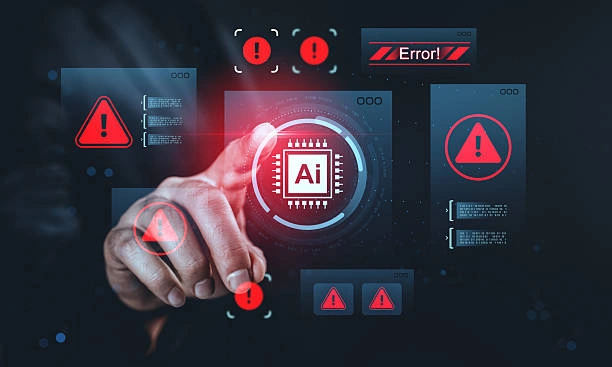
I’ve often wondered if we’re moving toward a future where human judgment is obsolete. Honestly? I don’t think we’re there, and I’m not sure we should be. While AI is great at crunching through billions of data points, it can still struggle with context. This is why the most robust platforms are moving toward a “teammate” model. The AI takes care of the heavy lifting—the endless scanning and those initial red flags—but you still need a person in the loop to make the final call when a situation gets nuanced.
A More Invisible Security Experience
The best part of this shift for you and me is that security is becoming quieter. We’re seeing more “invisible” authentication, like passkeys and biometric signals, which are much harder to fake than a password. It finally feels like we’re getting to a place where being safe online doesn’t have to be a constant chore.
What do you think about AI monitoring your behavior to keep you safe? Does the trade-off for better security feel worth the extra layer of surveillance? Let us know your thoughts in the comments below!
FAQ’s
u003cstrongu003eWhat is AI-driven risk detection in online security?u003c/strongu003e
AI-driven risk detection analyses user behaviour in real time using machine learning to spot unusual activity that might point to fraud, account takeover, or illegal access.
u003cstrongu003eu003cstrongu003eHow does AI detect unusual user behavior?u003c/strongu003eu003c/strongu003e
In order to create a baseline of u0022normalu0022 behaviour and quickly identify deviations, AI models examine patterns like typing speed, mouse movement, login times, and device usage.
u003cstrongu003eu003cstrongu003e Why are traditional rule-based security systems no longer enough?u003c/strongu003eu003c/strongu003e
While AI continuously learns and identifies threats that have never been seen before, rule-based systems are dependent on predetermined conditions and are unable to quickly adapt to new fraud techniques.
u003cstrongu003eHow does AI-driven risk detection prevent online fraud in real time?u003c/strongu003e
Artificial intelligence (AI) systems keep an eye on activity as it occurs and react instantly by sending out alerts, adding layers of authentication, or stopping transactions before harm is done.
u003cstrongu003eIs AI-based risk detection used in financial and regulated platforms?u003c/strongu003e
Yes. AI-driven risk detection is crucial to sectors like fintech, digital banking, and regulated online gaming platforms in order to comply with regulations and stop fraud.
u003cstrongu003eDoes AI-driven security slow down the user experience?u003c/strongu003e
No. Reduced friction, which enables authorised users to log in seamlessly while subtly thwarting threats in the background, is a significant benefit of AI-based systems.
u003cstrongu003eHow does AI balance security and user privacy?u003c/strongu003e
The majority of AI systems minimise privacy risks while still providing robust fraud protection by concentrating on behavioural patterns rather than personal data.
u003cstrongu003eCan AI replace human security teams?u003c/strongu003e
AI does not replace humans. It handles large-scale detection and pattern analysis, while human experts make final decisions in complex or high-risk cases.u003cbr/u003e
Read more engaging articles in the Artificial Intelligence category at Swifttech3.